Snow Load Removed Without Gutter Damage
Roof raking and snow removal in Nashua for eave-line snow that drives ice dam formation and unpredictable shedding
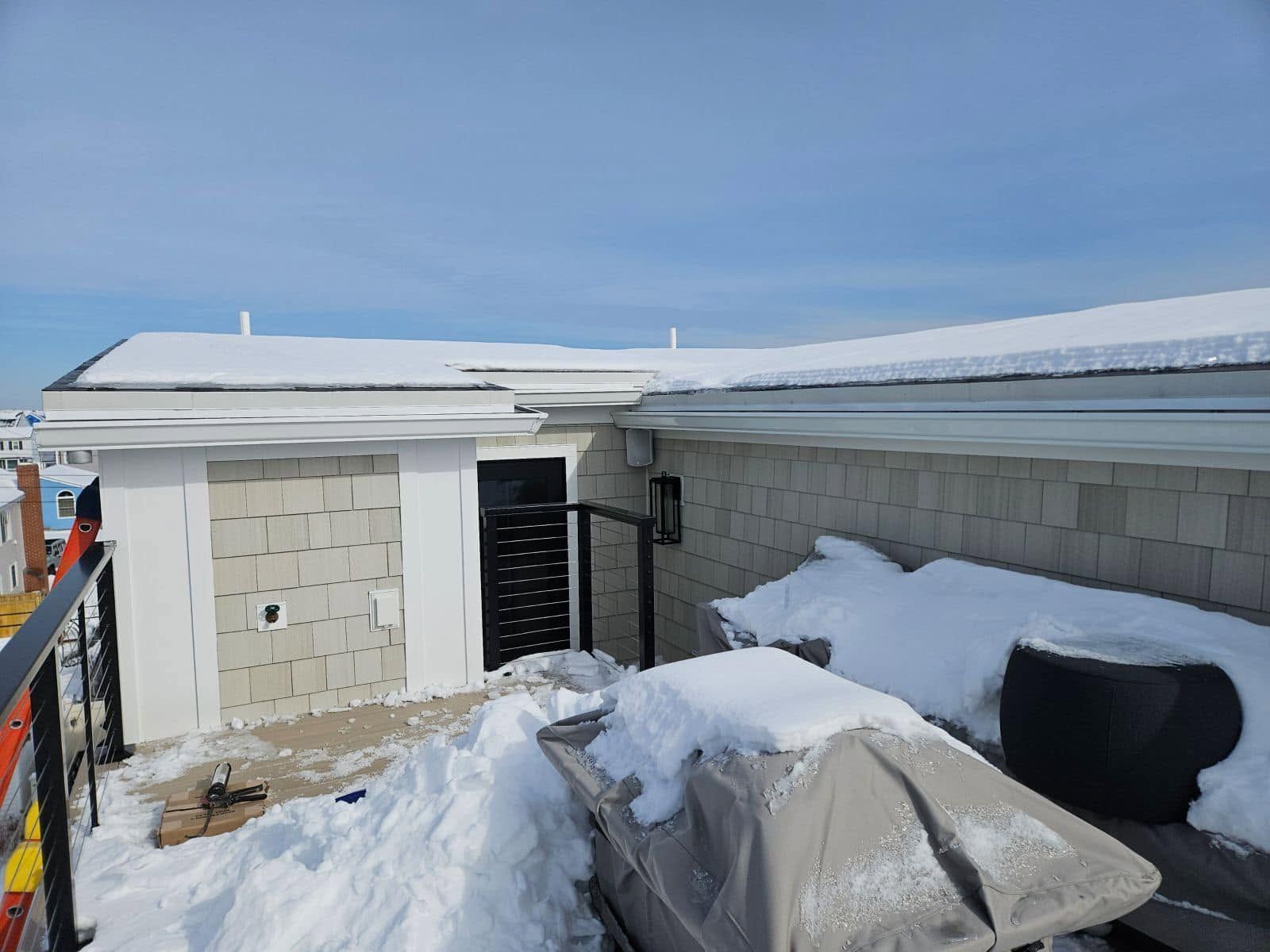
Heavy wet snow stacked at the eave line creates the conditions for ice dams long before the freeze arrives. The raking technique used by GWB Seamless Gutters stops at the eave line to remove the snow load without bending hangers or pulling gutter sections loose. Bedford and Merrimack colonials with steep gable ends shed snow unpredictably onto entry walks and gutters below, and removing snow from the upper roof prevents both ice dam formation and the sudden release that damages gutters and buries walkways.
The technique focuses on controlled removal of the snow driving ice dam formation, not dragging everything off the roof in a way that creates new problems at the gutter line. New Hampshire nor'easters stack heavy wet snow on eaves, and the weight alone can pull poorly spaced hangers free even before the snow melts and refreezes.
Arrange a property assessment to evaluate snow load risk and schedule raking after the next significant storm.
What Controlled Raking Actually Accomplishes
Raking removes the lower three to four feet of snow from the eave line—the section that holds heat from the attic and melts first, creating the water that refreezes into ice dams. By clearing this zone after each storm, the roof sheds naturally without building the dam that traps melt and forces it under shingles. The process leaves enough snow on the upper roof to avoid sudden slides while removing the section that creates drainage problems.
After raking, the eave line clears faster during the next thaw, gutters stay visible and functional, and the fascia avoids the sustained ice contact that splits boards and soaks the substrate. Entry walks below gable ends stay accessible because snow releases gradually instead of sliding off in heavy sheets that bury steps and damage plantings.
The service works best as a scheduled response after each nor'easter, not as a one-time intervention. Properties with steep gable colonials benefit most because the roof pitch that sheds snow efficiently in moderate weather becomes a liability during heavy wet storms when timing and volume create hazards at ground level.
Questions About Roof Raking Service
Homeowners often ask whether raking is necessary if heat cable is already installed, or whether they can handle it safely themselves. Here's what factors into the decision.
Why does raking stop at the eave line instead of clearing the entire roof?
The eave section is where ice dams form, and it's the only part that needs clearing to prevent drainage problems. Removing snow from the entire roof risks damaging shingles and gutters without adding protection.
How does raking prevent ice dams if it doesn't remove all the snow?
Ice dams form when trapped melt refreezes at the cold eave. Removing the snow from that zone eliminates the melt source, so there's no water to refreeze and build into a dam.
When should raking happen after a storm?
Raking works best within 24 to 48 hours after snow stops, before freeze-thaw cycles start and the eave-line snow begins melting and refreezing. Bedford and Merrimack properties with steep gables are highest priority because they shed unpredictably.
What makes DIY raking risky for homeowners?
Raking from the ground with an extension tool creates leverage that bends gutter hangers and pulls sections loose if the technique isn't controlled. Most homeowner damage happens when the rake is pulled too hard or angled incorrectly at the eave.
Does raking replace the need for heat cable?
On some properties, scheduled raking after each storm prevents the snow buildup that requires heat cable. On others—especially low-pitch roofs with poor ventilation—both services work together to manage snow and ice throughout the season.
GWB Seamless Gutters uses a technique-first approach that protects gutters while removing the snow load that drives damage. Schedule post-storm raking to keep eave lines clear and functional all winter.