Flow-Tested Systems Before Winter Freeze
Gutter Cleaning in Nashua for colonials and ranches before ice dam season starts
Clogged downspouts found after a debris scoop are a common miss because many cleaning services remove visible material from the gutter channel but don't flush the downspouts to confirm the full system is clear end to end. Water backs up inside blocked downspouts during the first freeze, and ice dams form along the fascia as melt refreezes overnight. GWB Seamless Gutters cleans gutters with a full downspout flush and flow test to confirm water moves from roof edge to ground level without backup, and Route 3 and South Nashua neighborhoods with colonials and ranches see debris pool at downspout elbows where the vertical run meets the horizontal underground drain connection.
Cleaning involves removing all leaf litter, seed pods, and roof grit from the gutter channel, then flushing each downspout with water to confirm flow and clear any blockages at the elbow joints or underground drain inlets. Debris that accumulates at the top of the downspout or at the transition point where the vertical pipe connects to the horizontal drain line won't show up during a visual inspection, so flow testing is the only way to verify the system is fully clear. This step prevents ice dam formation and foundation water damage before the first freeze arrives.
Arrange a pre-winter cleaning to clear debris and test downspout flow before temperatures drop below freezing.
What Changes After Full-System Clearing
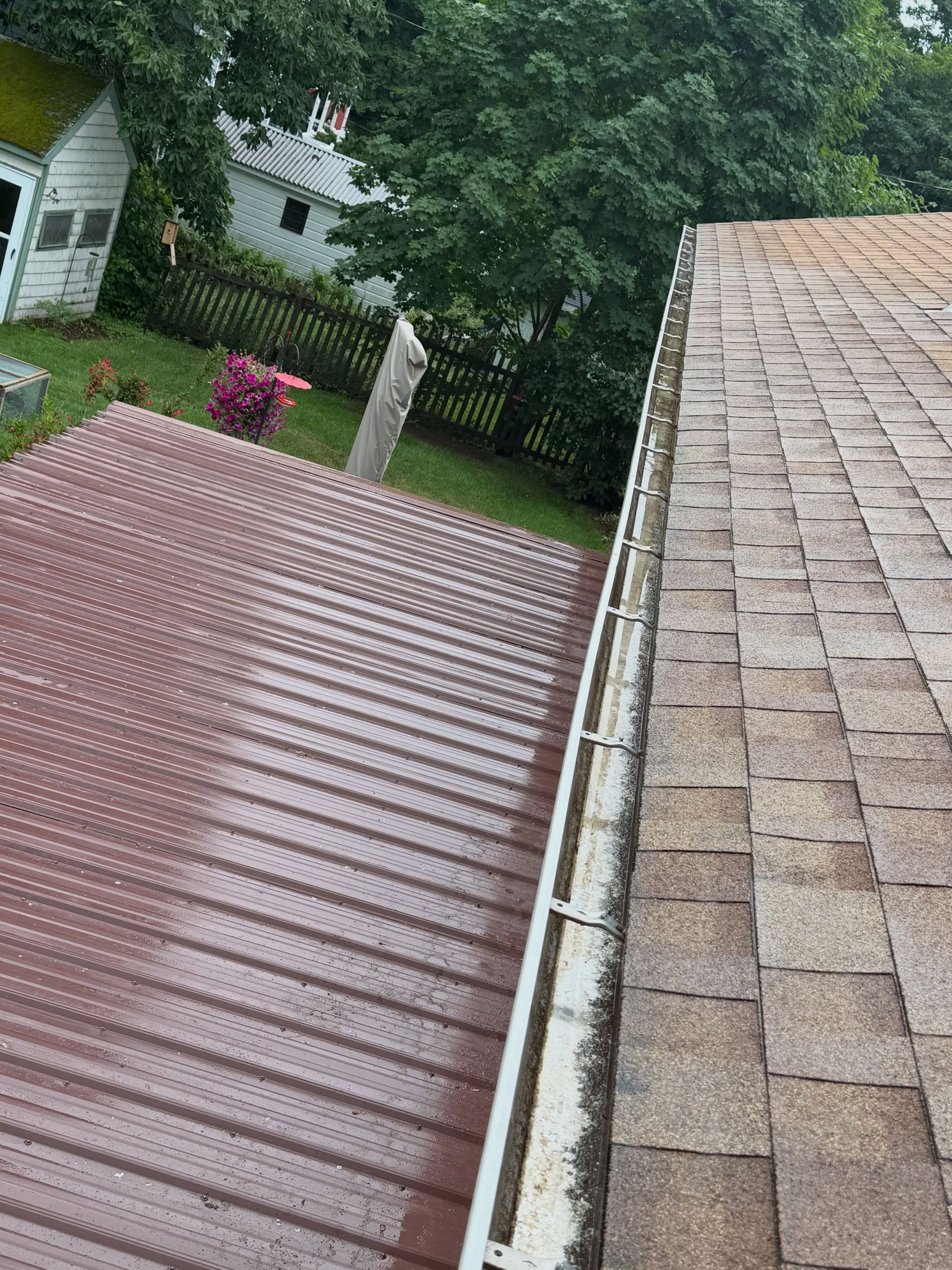
Cleaning starts with debris removal from the gutter channel using hand tools and blowers, followed by downspout flushing with water to confirm the full system drains properly from roof to ground. Blockages at elbow joints or underground connections are cleared using a plumber's snake or high-pressure flush, and flow is tested by running water through the gutter and confirming it exits at the downspout outlet without backup. This process ensures the system is ready to handle snowmelt and rain runoff without overflow or ice dam formation.
After cleaning, you'll notice water flows smoothly from the gutter channel into the downspouts without pooling or spilling over the edge, and downspout outlets drain freely without backup or slow trickling that indicates a partial clog. Post-stick-season and post-leaf-fall before the first freeze is the standard two-clean rhythm in New Hampshire, and properties with tree cover near the roofline benefit most from this schedule because debris buildup accelerates in neighborhoods with mature canopy. Route 3 corridor homes with a mix of tree density and housing proximity see fast accumulation that requires seasonal clearing to prevent overflow.
The cleaning includes disposal of all debris removed from the gutters, and downspout flow is confirmed before the job is considered complete. This approach prevents the maintenance step from being incomplete and leaving hidden clogs that cause problems during the first winter freeze.
What Homeowners Want to Know
Property owners in tree-heavy neighborhoods often ask about cleaning frequency and what flow testing involves beyond debris removal.
How often should gutters be cleaned on Nashua-area properties with tree cover?
Two cleanings per year is standard for homes with mature trees near the roofline, typically after stick season in late spring and again after leaf fall in late autumn before the first freeze. Properties with dense oak and maple canopy may need additional cleaning if debris accumulates faster.
What does downspout flow testing involve during a cleaning?
Flow testing means running water through the gutter system and confirming it exits at the downspout outlet without backup or slow drainage, which indicates a clear path from roof to ground. Blockages at elbow joints or underground connections are cleared using a snake or high-pressure flush.
Why do downspouts clog even when the gutter channel looks clear?
Debris settles at the top of the downspout where the vertical pipe meets the gutter outlet, and fine material like roof grit and seed pods packs into elbow joints or underground drain connections over time. These clogs don't show up during a visual inspection of the gutter channel.
Can clogged gutters cause ice dams during New Hampshire winters?
Water that can't drain through blocked downspouts backs up inside the gutter channel and freezes overnight, and repeated freeze-thaw cycles build ice dams along the fascia that damage shingles and allow melt to seep into the attic. Pre-winter cleaning prevents this cycle from starting.
What areas in Nashua see the fastest gutter debris buildup?
Route 3 corridor and South Nashua neighborhoods with colonials and ranches near mature tree lines see fast accumulation because the housing density and tree canopy create concentrated leaf drop. Properties in these areas benefit most from seasonal cleaning before debris pools at downspout elbows.
GWB Seamless Gutters performs full-system cleaning with downspout flush and flow test on every job, and the owner is involved directly in the work. Schedule a cleaning to clear debris and confirm flow before the first freeze.